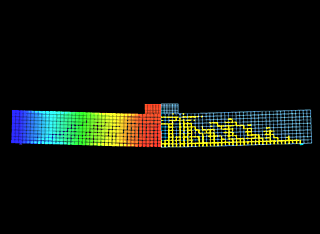
Advanced Demolition Engineering, Demolition Analysis & Protective Design Software

In today’s modern construction industry, safety, precision, and innovation are essential. With the growing complexity of structures, combining Demolition Engineering, Demolition Analysis, and Protective Design Software has become crucial for delivering efficient and safe solutions. Engineers and contractors now rely on advanced simulation tools to plan controlled demolitions, analyze structural behavior, and design resilient buildings.

Demolition Engineering ensures the safe removal of structures through carefully designed plans, minimizing risks and protecting surrounding areas. At the same time, Demolition Analysis uses advanced modeling techniques to predict how buildings will react under different conditions, allowing professionals to plan every step with accuracy and confidence. Meanwhile, Protective Design Software empowers engineers to design structures that can withstand extreme events like blasts, natural disasters, or progressive collapses.

By integrating these technologies, professionals can achieve safer, cost-effective, and more sustainable engineering solutions. For cutting-edge tools and expert solutions, trust Applied Science International to deliver unmatched innovation and precision in every project.

Why Should Construction Teams Invest in Structural Analysis Before Demolition?

Before starting any demolition work, construction teams face many risks. A building that looks weak from the outside could still have parts that are dangerous to remove without proper planning. This is why it is smart for teams to look closely at the structure before starting any work. Careful planning helps protect people, equipment, and nearby properties from harm.

One important part of this planning is a demolition analysis. This process gives teams a clear picture of how a building will react during demolition. It helps in finding weak points and areas that could cause trouble if not handled properly. With this knowledge, teams can plan safer and smoother operations.

Another tool that helps in such projects is protective design software. This software allows engineers to test and plan different demolition methods using computer models. It helps in finding the safest way to bring down a structure while keeping workers and surroundings safe. Using technology like this saves time and reduces costly mistakes.

Forensic engineering analysis also plays a role in the planning stage. This type of study helps in understanding why certain parts of a building failed or could fail. It gives insight into hidden dangers that might not be seen in regular inspections. With this information, teams can avoid unexpected problems during demolition.

Applied Science offers smart solutions for construction teams looking to carry out demolition work safely. Their services help teams avoid risks and complete projects with care. Contact Applied Science today to learn how they can support your next demolition project.

The Challenges of Forensic Engineering Analysis and Demolition Planning Without Protective Design Software

Explore the potential risks and challenges faced in analysis and demolition when not utilizing protective design. Neglecting protective design in demolition and analysis poses significant risks and challenges. Without it, the structural integrity of surrounding buildings can be compromised, leading to unintended collapses or damage. Unprotected demolition can also result in the release of hazardous materials, posing health risks to workers and nearby residents. Furthermore, the absence of a protective design increases the likelihood of accidents, injuries, and even fatalities. The lack of careful analysis before demolition can also lead to costly errors, such as the failure to identify critical load-bearing elements, resulting in unanticipated outcomes. Prioritizing protective design is essential for ensuring safety, preventing collateral damage, and minimizing risks during the demolition process.

Risks of Inaccurate Forensic Analysis

Forensic engineering analysis is crucial for understanding the root causes of structural failures, often following major incidents. However, when this analysis is conducted without the aid of Design Software, the risks of inaccuracies increase significantly. Engineers relying on manual calculations and assessments are more susceptible to errors, which can lead to incorrect conclusions about the failure’s cause. Without advanced modeling tools, it becomes challenging to simulate various scenarios, leaving engineers with an incomplete picture of how the structure behaved under different conditions.

The Complexities of Demolition

Demolition is a highly complex process that demands precision and foresight. When planning without protective design tools, demolition experts must often depend on traditional methods, which may not adequately account for all potential risks. This limitation can lead to unforeseen structural collapses, putting workers and surrounding buildings in danger. Additionally, the absence of precise simulations hampers planners’ ability to predict the demolition’s outcome accurately, which could result in costly delays and safety hazards.

Limitations in Risk Mitigation

The integration of Software is vital for effective risk mitigation in both forensic engineering and demolition planning. This software enables engineers to model and analyze protective measures, such as blast-resistant designs, that could prevent structural damage during demolition or in unexpected events. Without such tools, the margin for error widens, making it harder to create safe and effective plans. The inability to foresee potential issues and mitigate risks efficiently increases the likelihood of project setbacks and safety concerns.

The Need for Advanced Software Solutions

In both analysis and planning, the absence of Protective Design Software poses significant challenges that can compromise the safety, accuracy, and efficiency of projects. Advanced software tools provide the necessary precision to avoid errors and ensure that engineers and planners can develop reliable, safe, cost-effective solutions. Embracing these tools is beneficial and necessary for achieving successful outcomes in these demanding fields.

Conclusion

Applied Science International (ASI) is a leader in forensic structural engineering, providing advanced software and services for demolition and protective design. Their innovative solutions help engineers and planners achieve safe, accurate, and efficient results in challenging projects. Trusted worldwide, their tools and expertise ensure reliability and precision in the most demanding engineering scenarios. Whether you need support in forensic analysis or demolition plan, they are here to meet your needs. Visit their website for more information:

https://www.appliedscienceint.com/

The Impact of Structural Design Software in Forensic Engineering and Protective Design

The design software is transforming the fields of  engineering and protective design. These advanced tools provide essential support in analyzing, evaluating, and enhancing structural integrity, ensuring both safety and reliability in various contexts. Forensic structural engineering focuses on investigating and analyzing structural failures to determine their causes. The role of design software in this field is vital, as it offers a range of capabilities to simulate and assess structural conditions leading up to failure.

Protective design is aimed at creating structures that can withstand extreme conditions such as blasts, earthquakes, or other catastrophic events. Protective Design Software plays a crucial role in this process by allowing engineers to model and test the resilience of structures under various stress scenarios. In forensic engineering, software is used to investigate incidents such as building collapses, material failures, or design flaws. The software assists engineers in reconstructing the events leading up to the failure and analyzing the contributing factors.

In protective design, the software is used to ensure that structures can withstand various extreme conditions. The ability to simulate and test different scenarios helps engineers design buildings that offer enhanced protection and security. Structural design software is a powerful tool in structural engineering and protective design. By providing advanced modeling, analysis, and simulation capabilities, the software supports engineers in investigating failures, enhancing structural resilience, and optimizing designs for extreme conditions. For more information on how design software can benefit your projects, read this full article:

https://appliedscienceint.hashnode.dev/the-impact-of-structural-design-software-in-forensic-engineering-and-protective-design

Demolition and Forensic Engineering Service with Software Programs

We’re going to talk about three topics related to the building and construction sector. The subjects covered include design software for structural construction projects, demolition, and forensic structural engineering. Let’s get going.

Demolition Engineering

Demolition is a verb that means to destroy, disassemble, or remove. It is the planned and controlled removal of any building structure, whole or in part. Demolition is planned for a variety of reasons. For example, to make room for new construction. Or if the building’s stability was lost or there was structural damage. Demolition engineers carry out much more than only destroying or exploding structures. The task may be challenging and risky. A demolition engineer uses surveying equipment, testing tools for material strength (and weakness), and machinery for dismantling or destroying materials and buildings.

Structural Forensic Engineering

It is a kind of service involving an investigation that focuses on structural weaknesses. Expert forensic engineers can identify the root cause of structural failures on a smaller scale as well as larger-scale collapses of buildings or bridges. It is the responsibility of experts to determine the precise reasons why failed structures occurred in order to prevent a repeat of the same error.

Software Programs

When it comes to structural building projects or activities, we cannot discount the value of software. Programs like structural design software are important for every project, including PBD-based projects, demolition projects, forensic structural engineering projects, and analyses. In addition to helping professionals save time, effort, and money, the systems also guarantee 100% correct outcomes.

You can contact us if you want experienced professional support for such initiatives. We at ASI, Applied Science International, provide structural design software so that professionals can organize and create various construction projects. This helps professionals in developing new, more precise engineering and design procedures for construction while employing the best and most cutting-edge technologies. 

Read full blog here – https://sites.google.com/view/appliedscienceintus/demolition-and-forensic-engineering-service-with-software-programs

Better To Analyze And Then Demolish

It is important to keep a number of factors in mind when designing a new building, including its strength, quality of materials, aesthetic appeal, functionality, energy efficiency, and environmental sustainability. To improve the durability of a structure, architects work on every aspect. Similarly when there is a talk about demolition, a complete analysis is necessary. In addition to natural or environmental causes, renovation needs, aging buildings, non compliance with government regulations, and others, there may be several reasons for demolishing the building. If the property can no longer be maintained or kept, it may be better to consider tearing it down.  

Demolition work is basically straightforward but that doesn’t mean it is without risks. Demolition entails destroying, razing, or wrecking the structure partially or fully. Destroying any property can be dangerous if proper analysis is not done with adequate precautions. Just like Structural Design Software for designing assistance there are softwares for demolition planning also. With the help of these tools engineers analyze the complete situation and then implement the demolition process. Let us look at some major points engineer must keep in mind before beginning the demolition: 

  1. The analysis must include wind and seismic analysis for structures located in wind- or earthquake prone areas to ensure they don’t fail prematurely.
  2. Dust analysis is very important as the dust particles generated from demolition activity can be hazardous to the environment and a nuisance to the local community. 
  3. Engineers must estimate the sound intensity in DB due to explosives in the process of demolition. Noise generated in demolition sites is a major concern for contractors, property owners, and the local community.
  4. With the help of protective design software, engineers can analyze the complete impact of blast, precautions needed, and can make progressive collapse designs. 
  5. Engineers must make the predicted plan and compare the actual scenarios with the predicted for better understanding. 
  6. Before you begin the demolition process, take the appropriate measures for asbestos removal or disposal. 

There is more to demolition than implanting the explosives and breaking down the building. Demolition process can be dangerous, hence a proper demolition planning is required. Modern softwares can help engineers in planning and execution of plans. Applied Science is a quality software service provider for structural engineering. 

For more details, visit: https://www.appliedscienceint.com/ Read full blog here – https://appliedscienceint0.wixsite.com/appliedscienceint/post/better-to-analyze-and-then-demolish

Use of Structural Design Software in Demolition Engineering Service

We are all aware that there is a huge requirement for new construction or reconstruction projects like extensive planning, analysis, and so on, in the same way as demolishing a building or a structure. It is very crucial because, at the time of the demolition process of any structural building, public and worker safety and welfare are the priorities. And all this demolition planning and analysis are managed and done by the demolition engineers. Plus, professionals analyze various planning of demolition stages to make sure neighboring buildings and other properties should not come under any damage zone. There is no doubt that the process of demolition is not a piece of cake. It takes tremendous expertise and skills. That is why it becomes a challenging task to select a professional service. An expert demolition engineer provides safe and economical structural demolition sequences. There can be a field of structures, for instance, commercial buildings, bridges, tower blocks, et cetera.

Engineering Services for the Demolition of Structures Include:

  • Executing pre-demolition structural surveys
  • Recognizing potential hazards and advising on how to manage prestressed and post-tensioned structures
  • Grant in the practice of risk assessments and method statements
  • Estimating the strength of existing floors and advice on the size and kind of demolition plant
  • Demonstration by analysis of the safety of a pre-weakened structure

In order to make this complete procedure effective, efficient, and error-free, expert engineers utilize structural design software. With the support of this software program, they can efficiently work on the project and make sure there is 100% accuracy.

There are very important things that should be kept in mind while choosing a demolition service engineer, such as – license and insurance, expertise, competent team, availability, utilization of the right technology and tools, quote detailing for service cost, and most important, review the official website to collect the necessary information.

Want to learn about demolition engineering services or uses of protective design software? Search for Applied Science International. ASI relies on the knowledge of highly skilled engineers, scientists, and software developers to deliver its clients advanced structural analysis and simulation consultation services.

Check out the website now: https://www.appliedscienceint.com/

Get Recommendations for Redesign with Protective Design Services

Engineers build structures with an emphasis on the durability, aesthetics, achieve budgetary and functional goals. A lot of time they fail to give satisfactory strength and maintain the quality of the construction due to the limitation of time and budget.  In order to ensure structural integrity, the result has been the necessity to practice safety factors to make up for the simplification which ends up as over-designed and expensive structures. There are numerous technologies available these days but protective design software turned out to be the best solution for engineers to perform structural analysis. 


Some companies offer cost-effective protective design services for construction projects. They have a team of engineers who are able to study structure together as a complete structural system. They can study including floors, columns, walls, beams, and foundations in full 3D. As obvious, it reduces the requirement of material, saves cost, and helps engineers to fulfill the requirement of the project. This 3D model based structural analysis allowed engineers to perform non-linear and linear, dynamic and static analysis of structures. This helped them speed up the construction process without compromising the integrity of the structure.   


Incorporating a protective design software is essential to increase the protection for structure against natural and man-made extreme loads. Moreover, this software can be used to perform safer demolition. If you are going to handle another construction project and want to ensure the safety and positive outcomes for your customer, then you must choose ASI’s Extreme Loading for Structures (ELS) software. Their services include projectile impact analysis, progressive collapse design, and blast design. In these processes, they will generate a 3D model of your structure, including structural and critical non-structural components, and apply load to particular areas in accordance with the structure occupancy type. For more information, visit Appliedscienceint.com. 

Originally posted at – https://bit.ly/2K5q7nG